Project 55
Mirages - Louise Ward Morris
13th of November - 18th of December, opening Friday 13th of November, from 7pm
Inspired by one of the most beguiling visual phenomena, Mirages investigates light as both a source of knowledge and illusion. The multichannel video installations explore Vilém Flusser's premise that the distinction between reality and its digital representations is becoming increasingly unstable and draws on scientific research into light and optoelectronics. By considering the screen as the technological counterpart to the mirage, Mirages asks what it means for something to be materially present yet appear as something else and whether our observable world has ever been as tangible as we think.
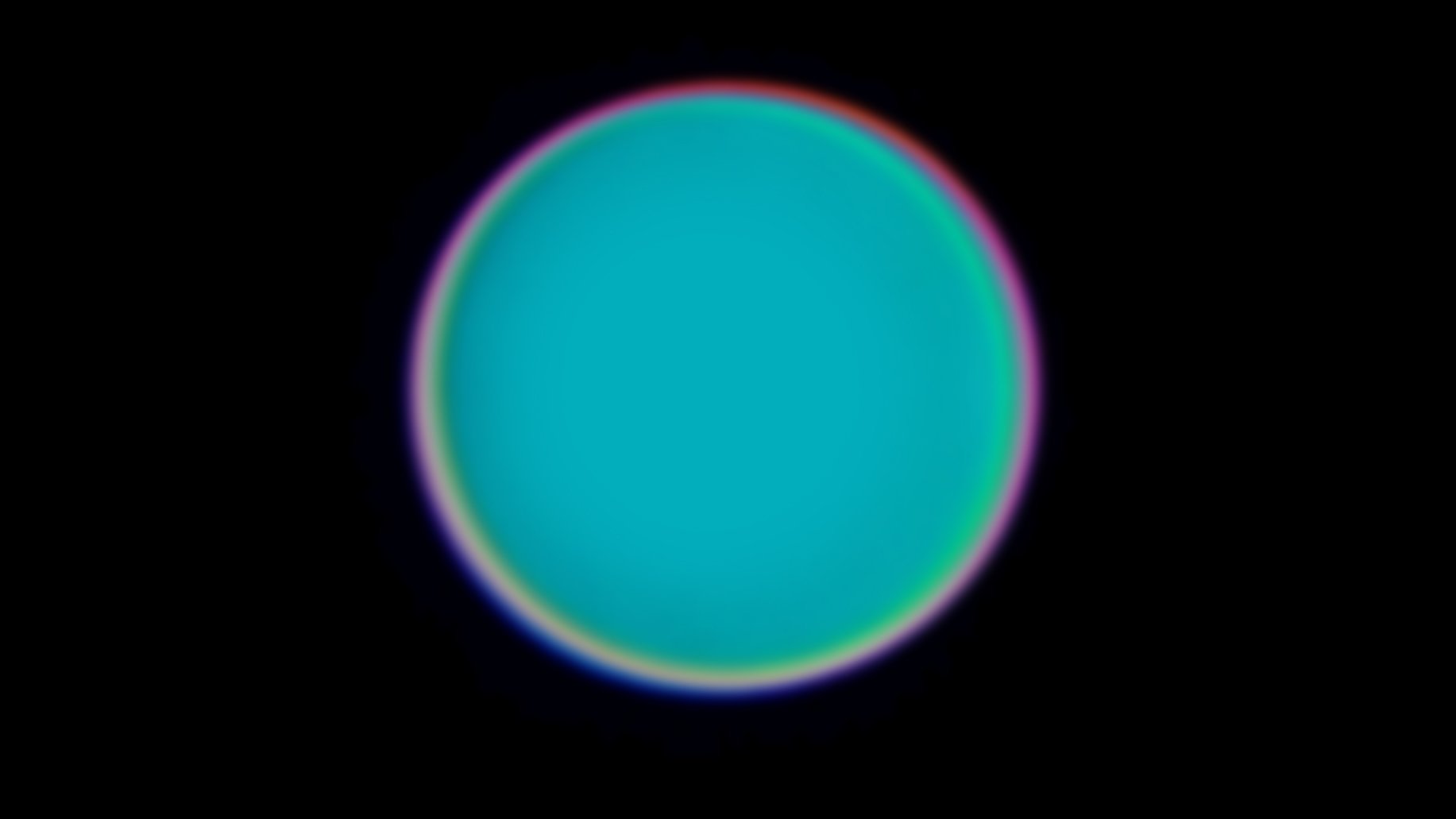
In his 1991 essay Digital Apparition (Digitaler Schein), philosopher Vilém Flusser proposes an existential problem confronting humanity: there will come a time when we can no longer distinguish between the lived world and the digitally produced world. According to Flusser, our experience of reality has long been measured by density, and as scientific advances have permitted increasing control over matter at smaller scales, our computer-generated worlds have become increasingly realistic. He suggests that the more visually defined these digital images are, the more unstable the distinction between representation and reality becomes. As a result, we are faced with an uneasy revelation, whereby either our invented realities are as real as the given reality or the given reality is as ghostly as they are.
Despite the ease with which we use the words “imagined” or “simulated” to describe digital worlds, our observable world is not without deception. Long before digital media, a mirage was often the source of the mysterious figments described in legends and stories. A naturally occurring optical illusion, the mirage undermines visual certainty by generating hovering apparitions of objects far from their physical location. Although the apparent image is not materially present, the phenomenon emerges from the environmental conditions between the viewer and the original object and, as a result, is still derived from reality. In the same way, each of the “digitally produced” worlds Flusser describes is synthesised in our attempt to calculate the known world and, as such, still has a foothold in the given reality from which it emerges.
Originating from an attempt to reproduce this most beguiling of visual phenomena, Mirages contemplates scientific endeavours to understand reality more precisely by defining, controlling and reproducing light at infinitely smaller scales and by developing technologies that equate brightness and enhanced visual perception with knowledge and realism. Developed over several years, the project has been supported by scientists at the Interdisciplinary Centre for Chemistry and Biology at the University of A Coruña, the Nitride Technology Center at the Technical University of Braunschweig, Germany, and the research group Organised Complexity and Self-Assembled Materials from the University of Barcelona who have generously shared their resources and research to inspire the project's development. A fascination with their rigorous pursuit of theories that use light to describe reality has been combined with research into historical theories of light and colour, laboratory experiments to create and record mirages, and artistic investigations into how today's ubiquitous optoelectronic device – the screen – engineers light.
The ongoing artistic research underpinning Mirages parallels Flusser's increasingly unstable notion of reality with scientific efforts to control light. Conceptually, the project views the screen as the technological counterpart of the mirage and the mirage as the perfect screen, whereby both demonstrate how the interaction of light and energy makes images visible that are not materially present. The multi-channel video installations and sculptures then explore these concepts of images, appearances and materiality through a play of transparency, opacity and colour. Like our digital worlds, Mirages asks whether our observable world has ever been as definable and tangible as we think.
Mirages has been generously supported by the EU's Next Generation Fund, the Ministry of Culture of Spain, and the Technical University of Braunschweig.
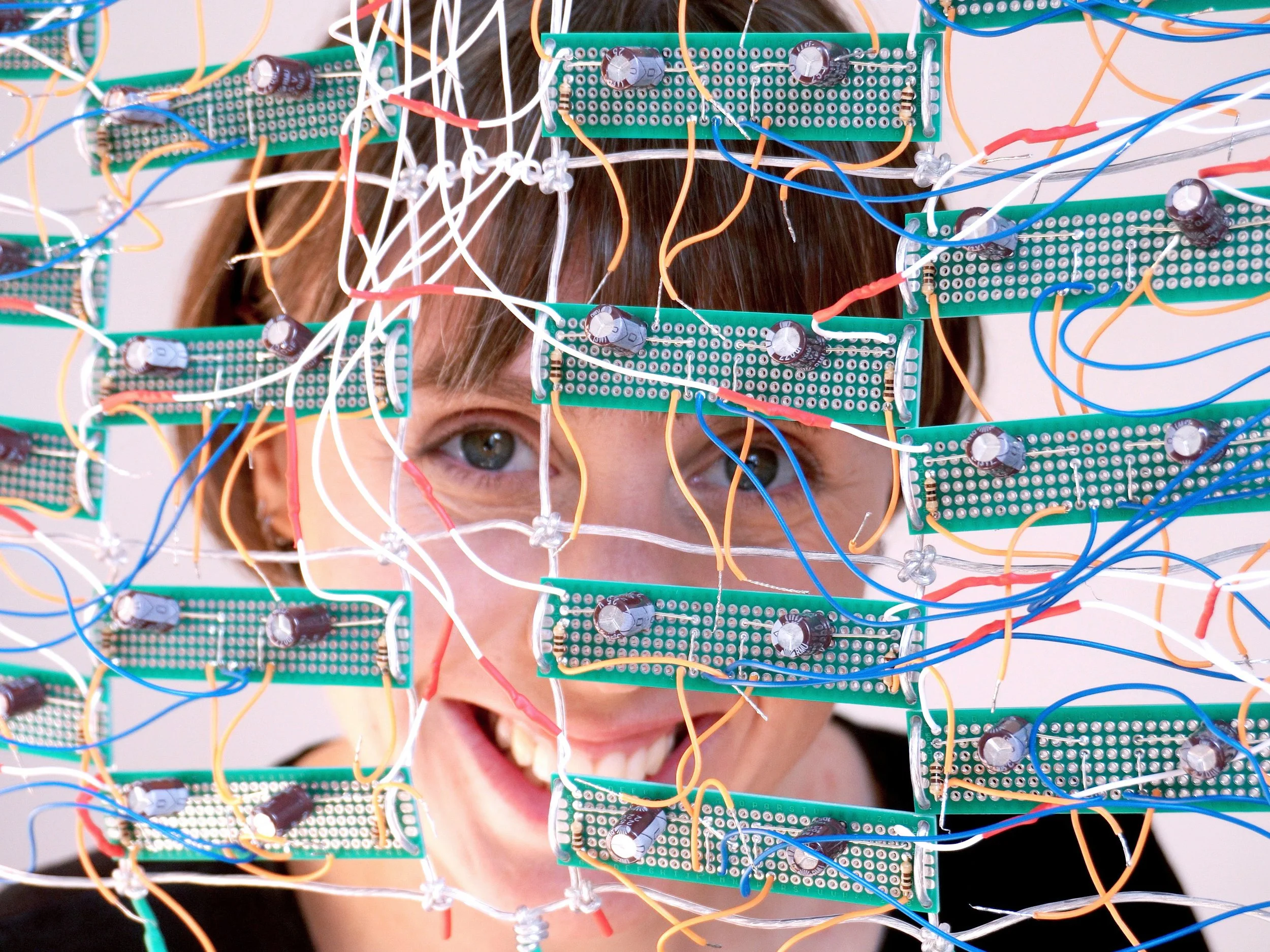
Louise Ward Morris is a British sculptor specialising in new media who lives and works in Barcelona.
Her practice combines diverse interests in electronics, phenomenology and science to explore how technology makes us human. She reinterprets everyday technology to critically address digital culture and technological development, and she regularly collaborates with scientists and researchers on her projects.
Louise's work has been supported by EU Next Generation, the Spanish Ministry of Culture, the Royal Society of Sculptors in the UK, Acción Cultural Española and Arts Council England, amongst others.
A graduate of Central Saint Martins in London, she has exhibited at institutions and festivals such as the Saatchi Gallery and the London Short Film Festival.