Project 52
Hay que tener estómago (You need a strong stomach) - Bruna Kury
Curated by Thais de Menezes
15th May - 12th June, opening reception Friday 15th of May, from 7pm
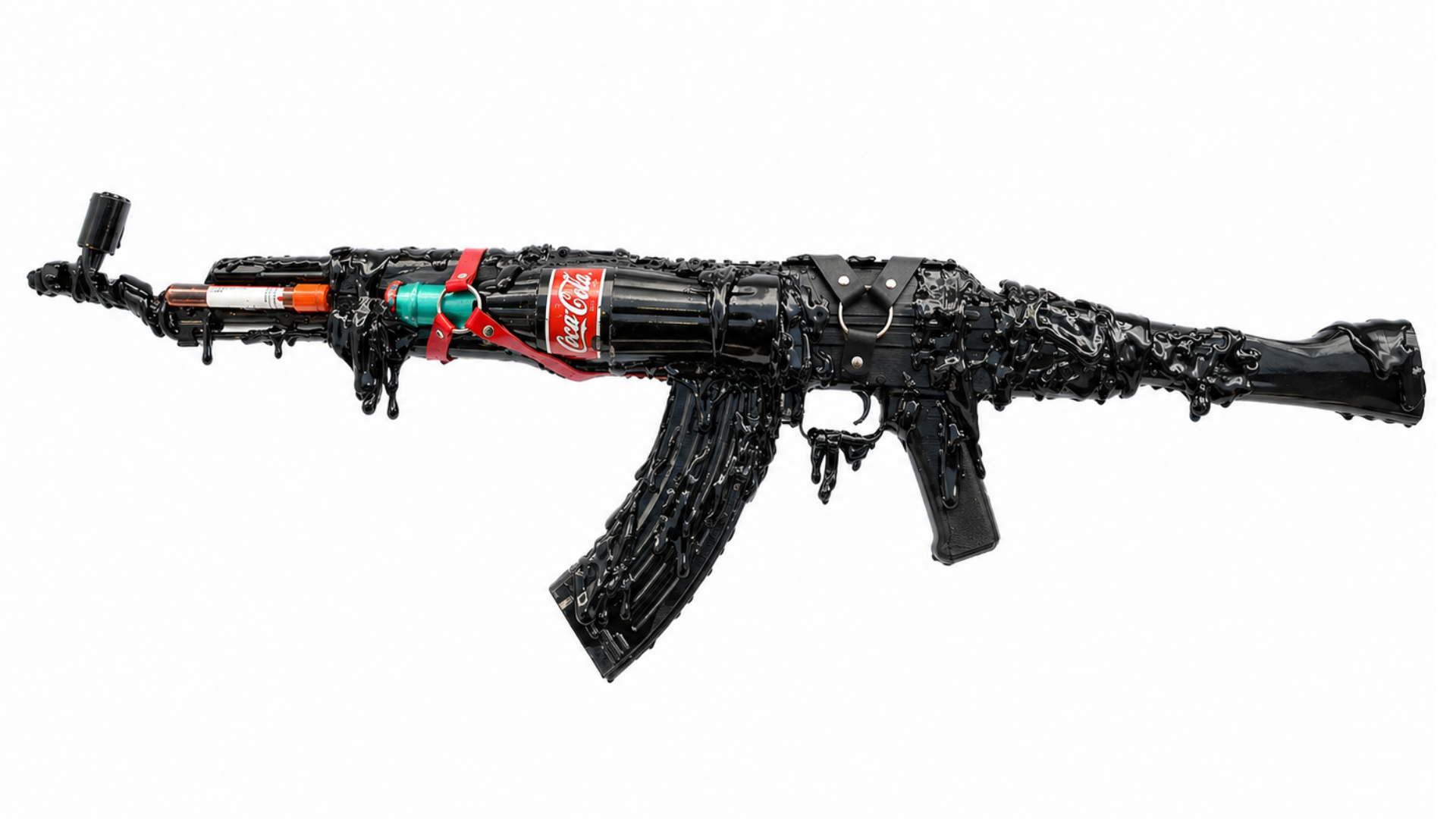
Over the course of almost two decades, Bruna Kury's artistic practice has been challenging the apparatuses of control, surveillance, and capture inscribed within the worldview of imperial-colonial whiteness. Her solo exhibition "Hay que tener estómago" (You need a strong stomach) operates as a direct counterpoint to a reality traversed by these policies of annihilation.
In this context, neoliberal cynicism presents itself as an economy of global ingestion: a mouth permanently open to capture and assimilation. Nothing lies outside of it - everything is swallowed, processed, and returned as value. Its jaws move under imperialist handcuffs; a regime that absorbs even the rainbow of identities and operates across a landscape of rubble. A deep throat, lined with petroleum, sustains this flow, whose stomach processes the violence that is converted into circulation and fuel for the system.
This cynicism ceases to be a mere posture and materializes in the politics of death and the fetishization of brutality. The spectacle of the brands that finance this disaster seduces with its intense colors, while simultaneously organizing violence against existences marked as targets by coloniality. It is a phallic choreography, sustained by the military industrial complex that quantifies lives as being of lesser value in a bombastic market that revels in the incidence of blows.
It is this politics of impact that perforates, bursts, breaks, and produces an aesthetic of debris and dust. However, Bruna Kury positions herself precisely within the fissure of this regime: fractures cease to be mere vestiges of violence and begin to operate as an active field of negation of that regime and of the creation of other experiences of rupture. Bodies, archives, and dust do not remain as residues of ruin, but affirm themselves as the matter of reinscription and dispute.
"Hay que tener estómago" thus articulates a position: not that of assimilation, but of metabolization. It is about observing, within the rubble, the counter-force — that which persists from impact and opens fissures within the very regime that produces it. And, in light of this, the question arises: do we also, in fact, possess another stomach capable of reorienting this impact?
Thais de Menezes
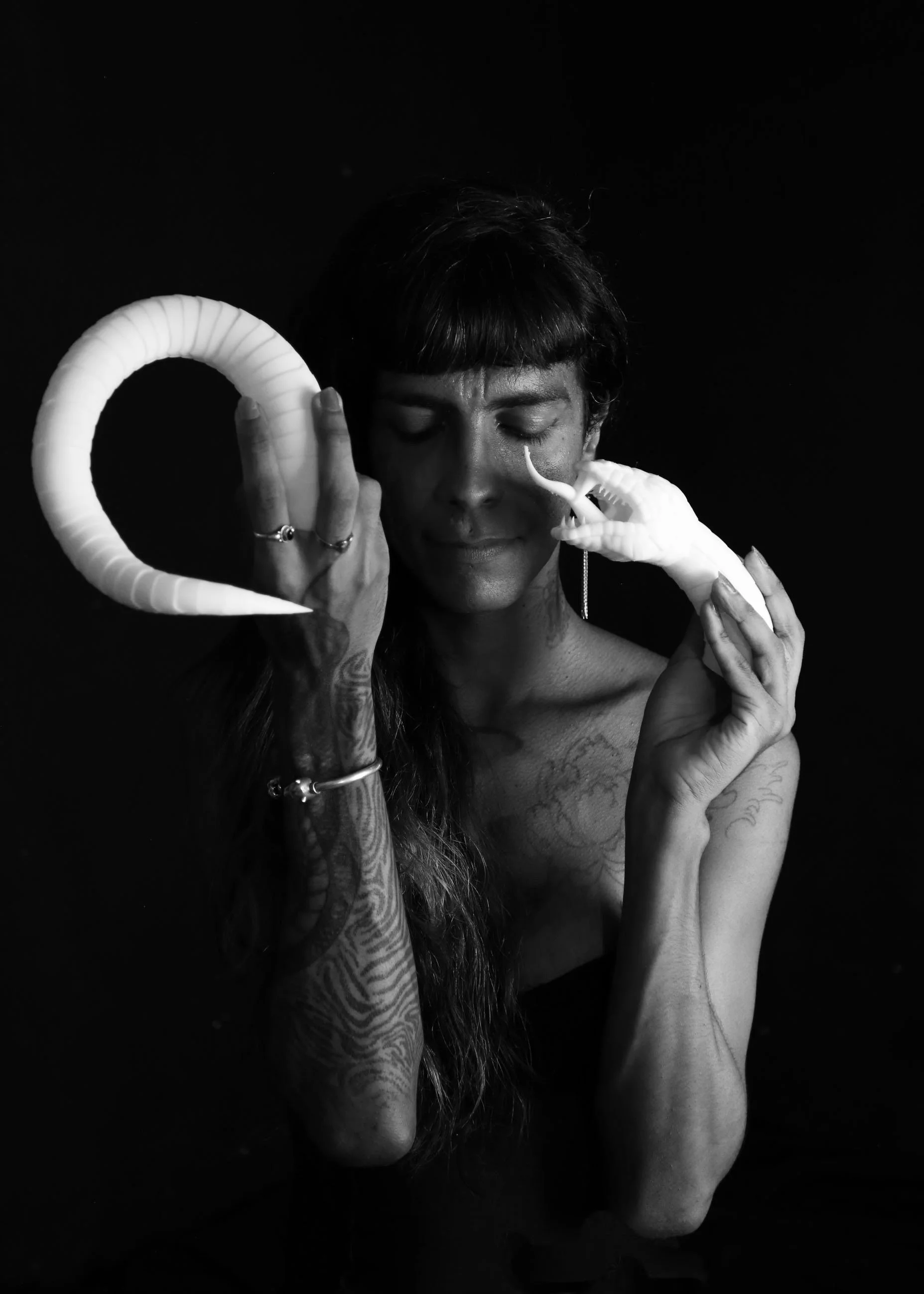
Bruna Kury is an anarcho-transfeminist, filmmaker, performer, and visual, sound, and tactile artist. Her work focuses on pieces shaped by gender, class, and race in relation to the cis-tema patriarchal, cisheteronormative system and structural oppressions (class struggle).
Her work is part of collections such as the Pinacoteca de São Paulo and MUTHA (Museum of Transgender History and Art). She collaborates with the publishers “Monstruosas” and “Fera Livre” and has participated in residencies such as Konvent (Spain), Capacete (Rio de Janeiro), Comunitaria (Argentina), and Pivô (Brazil, 2020).
Bruna has organized projects such as the “Post-PornôPirata” residency (Fortaleza) and participated in the Libres y Soberanas / Performacula Festival (Quito). Among her recent exhibitions are Sense esquerda no hi ha punt de llum (Centre d’Arts Santa Mònica, 2025), Maniquís at the Museum of Transfeminine Art of Mexico (2026), Desejo Negativo (Galeria Martins e Monteiro, 2026), Cartografías visuales para una escrita LGBTI+ (Espaço Arte Vivo, São Paulo, 2023), Entrañas - Els nostres cossos són camps de batalla (LGBT Centre, Barcelona, 2023), and Do vôo às narinas respirar (HOA Gallery, São Paulo, 2023).
During the pandemic, Bruna premiered two films for KuirPoetry and SexualHealers (Germany). She is currently enrolled in the Independent Studies Program at MACBA and is working on her third film.
Thais de Menezes is an art researcher and independent curator whose work operates across Europe and Latin America. Her practice is grounded in counter-colonial perspectives, developed through collaborative and multidisciplinary processes, with a particular emphasis on Southern epistemologies.
She engages in analytical work on restitution processes and contributes to critical readings of the construction of racialization in art historiography since the nineteenth century, as well as to the critical activation of collections through counter-hegemonic methodologies.
Thais' work integrates research, mediation, and curatorial development in the creation of educational frameworks and in fostering dialogue between artistic-social contexts, institutional settings, and independent collective initiatives.