Project 51
The Sun’s Northward Journey - Sejal Parekh
Curated by Zoé Boutte
10th April - 8th May, opening reception Friday 10th of April, from 7pm
Uttarayan, from the Sanskrit 'uttara' (north) and 'ayan' (movement), marks the passage of time from winter to summer solstice in the Hindu solar calendar. Celebrating the transition of seasons, Uttarayan also bears the promise of auspicious new beginnings towards spiritual renewal. In The Sun’s Northward Journey, Sejal Parekh explores the space between movement and stillness by situating Uttarayan within dislocation.
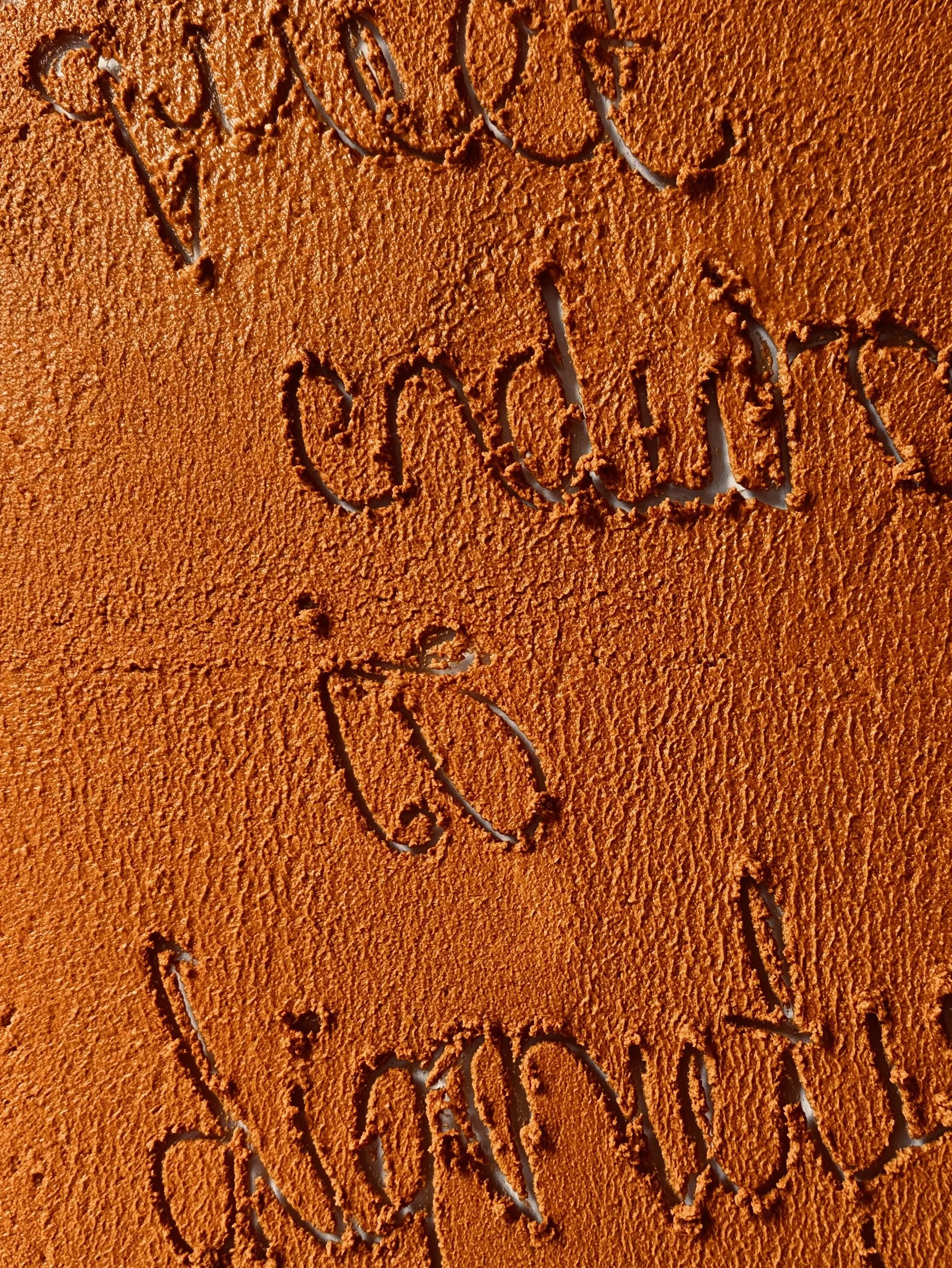
Transforming the gallery space into the sun’s own echo chamber, Parekh invites us to inhabit this space of paralysis. The artist asks us: what happens when we find ourselves caught within that fragile interstice, where the call fades into silence and the very act of moving dilates into an infinite stillness? The installation becomes a site to be traversed, a corporeal threshold holding us inside this critical moment when forward motion is struck by suspension. Through seriality and material friction, each piece becomes a portal where the promise of progress collides with the reality of being stuck between languages that do not translate, arbitrary borders and complex geographies, contradictory states of being, and materials never meant to touch. Bringing together printmaking, installation, and sculpture, the gallery becomes a liminal field in which the body understands what the mind cannot yet articulate.
In Parekh’s practice, turmeric is a recurring material that opens a layered terrain of recuperation, where the root’s vibrant yellow holds the tension of its many translations: as a marker of value akin to gold, a proxy for the sun, and an echo of the bonfires lit during Lohri, announcing the turning of the earth at Uttarayan. Drawn from the Indian holistic system of Ayurveda, turmeric carries histories of luck, healing and the strengthening of the body’s energy, omnipresent in everyday life, as it imprints cloths, flavours food, and scents the home through practices of love and care. Beyond the domestic sphere, this same hue becomes a signifier of otherness, distorted by the discrimination of diasporic communities and the extractive appropriations of Western science and wellness culture.
In conversation with herman de vries’ earth museum (1976-2015), Parekh responds to the Dutch artist’s careful gathering and rubbing of soil samples by creating her own gesture of connection and contemplation. Imprinting and staining turmeric onto Khadi paper and fabric, a material rooted in political resistance during India’s independence movement, she retrieves and transforms these charged materials as mutable vessels whose shared presence unsettles inherited narratives. Through this approach, she traces the hybridities that form her cultural, personal and relational identity, where sensory memory meets the feeling of hiraeth. From Welsh origins, this untranslatable term names a deep longing shaped by nostalgia for a home, place, or time irretrievably lost, whether real or imagined. This spiritual yearning also quietly mourns the unreachable and lost landscapes of the soul, a bittersweet ache that is nowhere and everywhere at once.
The Sun’s Northward Journey reflects on what it means to inhabit an in-between space in a world moving forward relentlessly and continually demanding more, an environment where pauses become vital acts of reorientation and reclamation. Parekh turns this tension into a site of reflection, engaging historically and culturally imbued materials not as symbols but as living presences that assert their own value, and allow new forms of relation and recognition to emerge where language falters and memory becomes tactile.
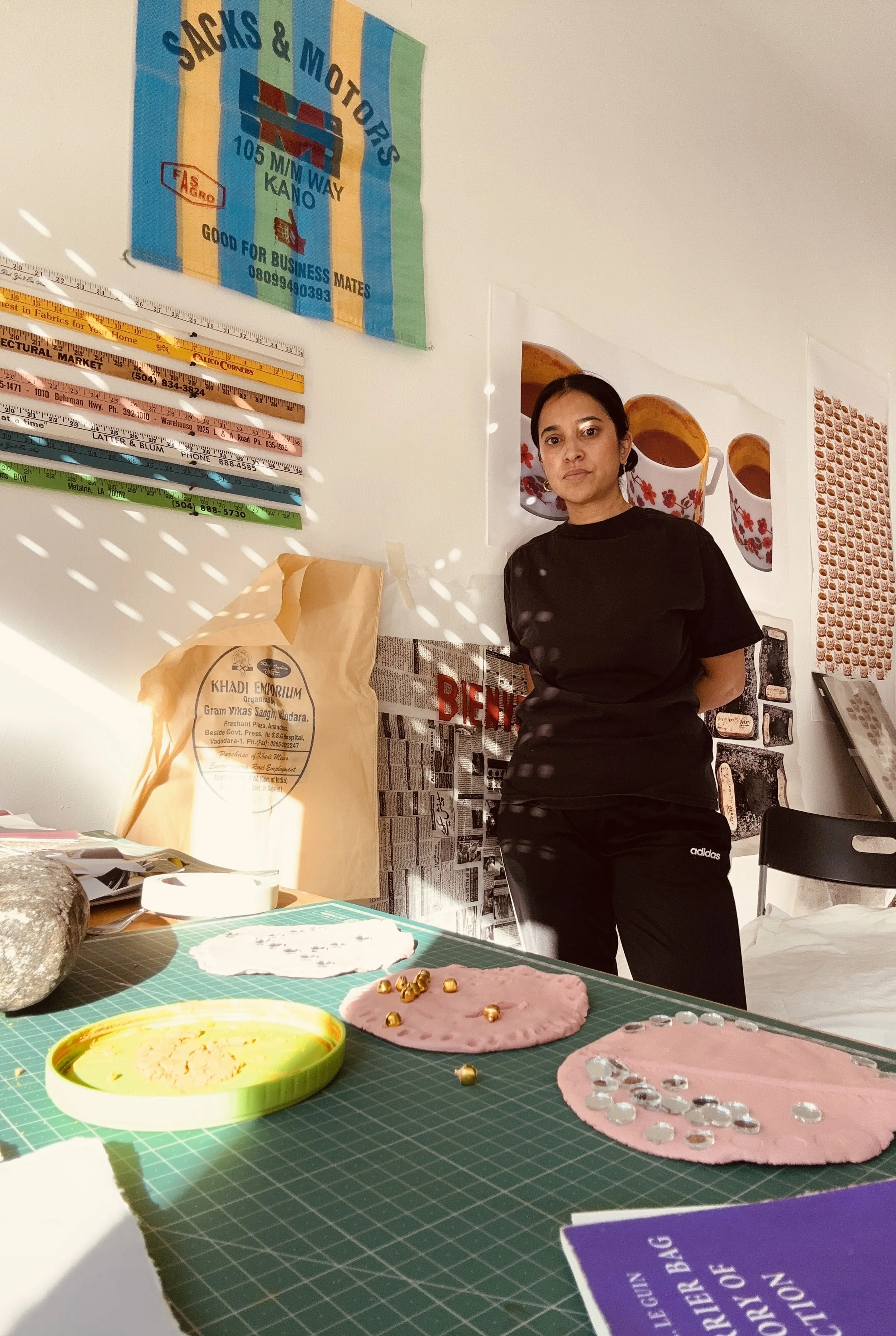
Sejal Parekh is a British born, Indian multi-disciplinary artist. Her practice spans sound, sculpture, and installation, and is rooted in an urgency to re-examine the everyday architectures of power that shape how we live, move, listen, and remember. She works with language and sound as material forms, often drawing on feminist, diasporic, and decolonial frameworks to reconfigure the familiar. Much of her recent work investigates how memory is encoded in the body and transmitted through space.
Her work has been presented at MACBA, Somerset House, Loop Video Art Festival, Museu Tàpies, Hope93, Ovada Gallery, SWAB Art Fair, Barbati Gallery Venice, CasCaDas and Stone Space London. Sejal has been commissioned by La Roca Village, Galería Senda for Art Meets Apolo, amongst others and her work has been acquired for the Soho House collection.
She is a graduate of Winchester School of Art (BA Fine Art Sculpture, 2002) and more recently the Royal College of Art (MA Sculpture, 2025), for which she was awarded the Deputy Vice Chancellor scholarship for an outstanding application. In 2025 she was selected to be part of Pia Ottes’ Artist Roundtable Program.
Sejal is one of the 2025/2026 selected artists in residence at Experimentem Art Barcelona.
Zoé Boutte, originally from the south of France, is an art historian and cultural practitioner based in Barcelona.
She holds an interdisciplinary bachelor’s degree from University College London (2021) and a research master in History of Art on Countercultures from the Courtauld Institute of Art (2023), and is currently studying Cultural Management at the Universitat de Barcelona.
Her research has explored how artists and communities mobilise visual culture, embodied action, and symbolic interventions to reclaim agency, shape collective memory, and shift sociopolitical imaginaries.
Previously, she has collaborated on the publication and group curation of Altres Extractivismes at Sant Andreu Contemporani in 2025, as part of the 11th edition of the curatorial platform On Mediation.